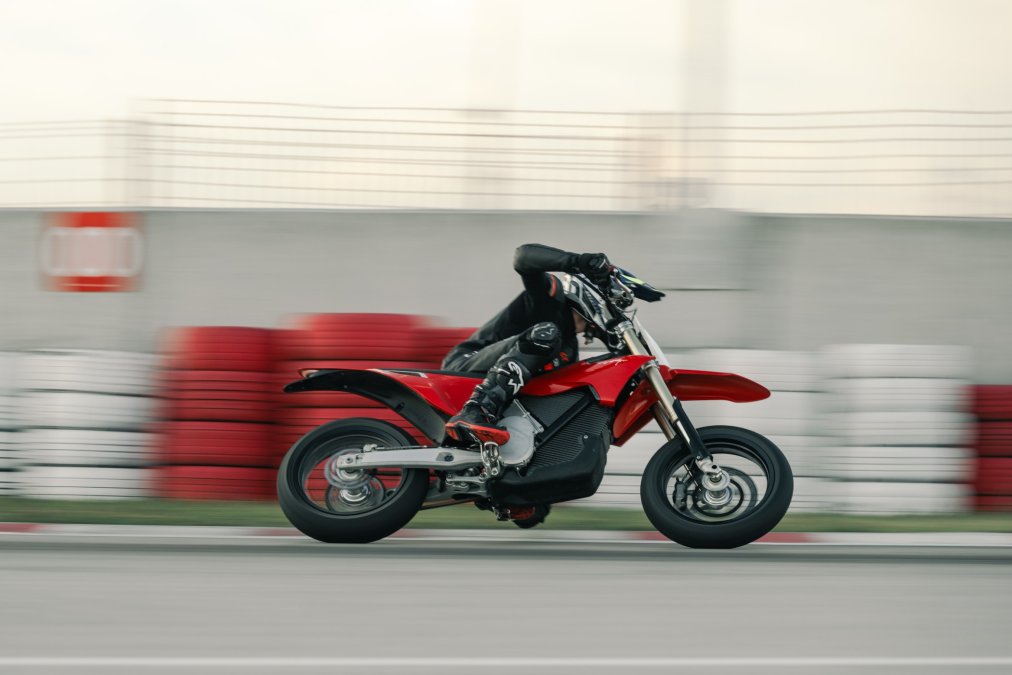
 comparison
Stark Future Motorcycle Review 2026: VARG SM Specs & Ride
Table of Contents
- Stark Future Motorcycle Review 2026: Is the Hype Justified?
- Electric Motocross Bike Performance Specs: VARG MX 1.2 vs. EX vs. SM
- VARG MX 1.2: Real-World Range, Charging Cycles, and Battery Life
- Stark Future vs Zero Motorcycles: Which Electric Platform Wins?
- The Monarch Powersports Test Ride Experience: A First Ride on the VARG
- Ownership Costs Beyond the Price Tag: Insurance, Maintenance, and Resale
- Final Verdict: Who Should Buy the 2026 Stark VARG?
- Frequently Asked Questions
Last Updated: September 5, 2026
Stark Future Motorcycle Review 2026: Is the Hype Justified?
The 2026 Stark Future lineup has redefined what riders expect from an electric motocross bike, and this stark future motorcycle review 2026 breaks down whether the VARG platform delivers. At Monarch Powersports, we have spent significant time on the VARG across motocross tracks and technical trails, and the verdict is clear: this is a legitimate performance tool.
The Stark VARG is an electric motocross bike engineered to replace the traditional 450cc combustion machine, offering instantaneous power and a lightweight frame. This review focuses on ownership data, not just first-ride impressions.
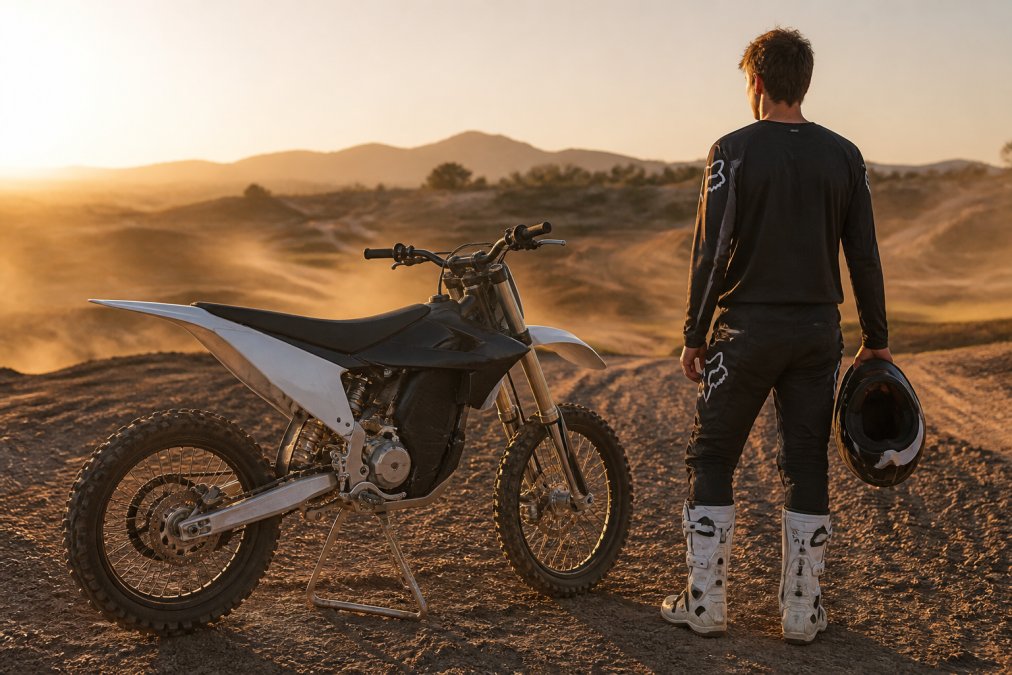
Below, we show how the VARG MX 1.2, EX, and SM compare, what real-world range looks like, and where Stark Future stands against Zero Motorcycles.
Electric Motocross Bike Performance Specs: VARG MX 1.2 vs. EX vs. SM
The electric motocross bike performance specs across the VARG lineup share a common core but diverge in intended use. All three models use the same lithium-ion battery and motor unit, but are calibrated differently from the factory.
Power Output and Torque Delivery
The Stark VARG MX 1.2 delivers adjustable power output from 10 to 80 HP, controlled through the bike's ride modes (starkfuture.com). A novice can dial down to 10 HP while a pro can access full race power. Torque delivery is instantaneous, with no clutch or gearbox, and throttle response is crisp without being twitchy at low settings.
Because the motor produces peak torque from zero RPM, you exit corners harder than on a combustion bike and carry more speed through whoops and ruts.
Chassis, Weight, and Ergonomics
The VARG's chassis geometry and frame rigidity are designed around a curb weight near a 450cc four-stroke, easing the transition from gas. The ergonomic profile is slim, the seat height is comparable to a standard motocross machine, and the swingarm is tuned to handle electric torque without headshake.
Model | Best For | Key Specs | Starting Price |
|---|---|---|---|
VARG MX 1.2 | Motocross racing | 10-80 HP, adjustable power | $12,900 |
VARG EX | Enduro and technical trails | 18-inch rear wheel, side stand | $13,900 |
Urban commuting and supermoto | 113-mile urban range, 57.9-inch wheelbase | $13,900 |
VARG MX 1.2: Real-World Range, Charging Cycles, and Battery Life
Range and charging are the two biggest anxieties for any prospective electric motorcycle owner. This section covers charging infrastructure, battery health over time, and the real cost of keeping the pack alive.
Real-World Range: From Race Pace to Trail Crawl
The VARG MX 1.2's range is entirely a function of throttle input. At a motocross track running at 80 HP, you will see roughly 15 to 20 minutes of hard riding before the BMS requests a charge. A full moto is about 15 minutes, so you can finish a race but cannot do back-to-back practice sessions without a plan.
Dial the power down to 30-40 HP for trail riding, and you can expect 1.5 to 2 hours of continuous riding. On a descending trail, the motor acts as a generator, feeding energy back into the pack and extending range by 10-15% compared to riding with regen off.
Charging Infrastructure: Level 1 vs. Level 2 vs. Public DC Fast Charging
The VARG MX 1.2 ships with a standard J1772 charging port, the same connector used by most Level 2 public charging stations across the United States. You are not locked out of the public charging network, but you will need to carry the correct adapter.
- Level 1 (120V household outlet): A standard wall outlet will charge the VARG's 6 kWh battery from empty to full in approximately 3.5 hours for the SM model, and slightly longer for the MX 1.2 due to its different BMS calibration (starkfuture.com). This is fine for overnight charging at home, but too slow for a race-day turnaround.
- Level 2 (240V, 30-50 amp circuit): This is the setup you want for serious track days. A dedicated Level 2 charger, like a ClipperCreek or JuiceBox unit, cuts charging time to roughly 1.5 hours for a full charge. This requires a 240V circuit in your garage, the same infrastructure an electric car owner would install. Expect to pay $500-$1,200 for the charger plus installation costs.
- Public DC Fast Charging (CHAdeMO or CCS): The VARG does not natively support DC fast charging; the J1772 port is AC-only. At a public station with only DC fast chargers, you will need a portable AC-to-DC converter, which is expensive and not widely available. For most owners this is a non-issue, but it is critical if you plan to ride to a distant trailhead and charge there.
Battery Degradation: What 12-24 Months of Data Shows
Early Stark VARG owners have logged over two years of use. Owners who charge daily and ride at race pace see a capacity loss of 5-8% after 12-24 months, translating to a loss of roughly 1-2 minutes of full-power riding per charge. Trail riders who charge less frequently see degradation closer to 3-5% over the same period.
The BMS limits charging to 80% of the pack's true capacity unless you explicitly select a 'full charge' mode for race day, reducing stress on the lithium-ion cells. The thermal management system also actively cools the pack during fast charging.
The Real Cost of Battery Replacement
Stark Future does not publish a list price for a replacement battery, but industry estimates for a 6 kWh motorcycle pack put the cost between $4,000 and $6,000, roughly 30-40% of the bike's original purchase price. The battery is a modular unit, so a certified technician can swap the pack in under two hours.
Riders who charge daily and ride hard should budget for a replacement within five to seven years. Casual trail riders will likely see the pack outlast their ownership period.
Stark Future vs Zero Motorcycles: Which Electric Platform Wins?
The stark future vs zero motorcycles comparison comes down to purpose-built design versus street versatility. Zero builds excellent street and dual-sport machines, but their off-road capability is not tuned for motocross abuse. Stark Future engineered the VARG from the ground up as a race bike that happens to be street-legal in certain configurations.
Ride Modes and Customization
Stark Future offers a level of software customization that Zero does not match. The VARG's ride modes let you adjust peak horsepower, throttle response, engine braking, and traction control through a smartphone app, with 100 distinct power settings between 10 and 80 HP. Zero's bikes have preset profiles rather than fully adjustable maps.
Off-Road Capability vs. Urban Mobility
The decision gets complicated if you need one bike for everything. The VARG SM is the best Stark for urban mobility, with its 57.9-inch wheelbase and street-oriented tires. But if your riding is 80% pavement, a Zero SR/F offers more range and better highway capability. The VARG EX is the pick for enduro riders who want the Stark power delivery with an 18-inch rear wheel and a side stand. youth motocross apparel.
The Monarch Powersports Test Ride Experience: A First Ride on the VARG
The monarch powersports test ride experience exists because spec sheets cannot convey what electric torque feels like on a dirt track. We host private circuit demo sessions so riders can experience the VARG's power delivery in a controlled environment before committing to a purchase.
Our certified technicians calibrate each demo bike to the rider's skill level. If you are coming from a 450cc gas bike, we set the power map to a familiar delivery curve. If you have never ridden an electric motorcycle, we start you at a lower output and let you build up confidence as you complete laps.
Rider feedback consistently lands on the same points: the absence of engine braking takes a few laps to adjust to, and the silence takes getting used to. The regenerative braking settings can be tuned to simulate engine braking, shortening the adaptation period.
Ownership Costs Beyond the Price Tag: Insurance, Maintenance, and Resale
The VARG's purchase price is only the beginning. This section provides a structured analysis of insurance premiums, regulatory hurdles, and projected resale values, the three areas where most first-ride reviews leave buyers in the dark.
Maintenance Costs: The $628 Per 100 Hours Reality
Stark Future cites approximately $628 per 100 hours of use for consumables like brake pads and tires, assuming you do the work yourself (starkfuture.com). If you pay a shop, add 30-50% for labor. The maintenance list is short: brake fluid flush every two years, chain adjustment every 500 miles, and fork oil changes every 100 hours. There is no engine oil, no air filter, no clutch plates, and no top-end rebuilds.
The VARG has a liquid cooling loop for the battery and motor, and the coolant needs to be checked and replaced every two years. This is a $50-$100 service that most owners can do themselves.
Insurance Premiums: What You Will Actually Pay
Insurance for the VARG is not one-size-fits-all. Some carriers price it as a standard street bike, while others treat it as a specialty vehicle. Premiums are typically 10-20% higher than a comparable 450cc combustion motocross bike because the VARG's replacement cost is higher and the bike is more attractive to thieves.
For a 2026 VARG MX 1.2, expect to pay between $600 and $1,200 per year for full coverage. Riders in states with high motorcycle theft rates, like California and Florida, will be at the higher end. Riders who insure the VARG as off-road-only can expect to pay $200-$400 per year for comprehensive coverage.
If you convert a VARG MX 1.2 for street use, you must disclose that modification to your insurer. Failure to do so can void your policy. The SM model, which comes street-legal from the factory, is easier to insure because its VIN is already registered for highway use.
Regulatory Hurdles: Street-Legal Conversion and State-Specific Rules
The VARG MX 1.2 and EX are sold as off-road vehicles. To make them street-legal, you must add a headlight, taillight, brake light, mirrors, and a horn, a $300-$500 parts kit, plus labor. The bigger hurdle is the title and registration process, which in most states requires a 'converted vehicle' title and an inspection.
Some states, like California, have stricter rules. CARB requires a VIN verification and a brake and light inspection, though electric vehicles are exempt from emissions testing. Other states, like Texas and Florida, are more lenient and will register a converted electric motorcycle with minimal paperwork.
If you are buying the VARG SM, which is street-legal from the factory, you avoid all of this. It comes with a proper VIN, a title, and a manufacturer's certificate of origin.
Resale Value Analysis: The Consumer Electronics Problem
The VARG has held its value well, with used 2023 and 2024 models selling for 70-80% of their original MSRP, better than most combustion motocross bikes. However, the pace of battery technology improvement is a real risk, as a used 2026 model will compete against newer bikes with potentially better range and lower prices.
A realistic projection for a 2026 VARG MX 1.2 is that it will retain 60-70% of its value after three years and 40-50% after five years. The battery's health will be the single biggest factor in resale value.
Buyers should expect the depreciation curve to look more like consumer electronics than a classic combustion motorcycle. The VARG's modular battery design means a buyer can factor in a $4,000-$6,000 replacement cost and still come out ahead of a combustion bike requiring a $2,000 top-end rebuild every 100 hours.
Final Verdict: Who Should Buy the 2026 Stark VARG?
The 2026 Stark VARG is the best electric motocross bike we have tested, and for a specific rider, it is the only choice. If you race motocross or enduro and want to eliminate the maintenance burden of a combustion engine while gaining instant torque, the VARG MX 1.2 or EX will not disappoint.
Riders who need a single bike for long-distance street riding, or who lack access to reliable charging infrastructure, will find the range limitations frustrating. The VARG is a purpose-built machine that excels in its intended environment.
The stark future motorcycle review 2026 conclusion is straightforward: schedule a demo before you decide. Our team will calibrate the bike to your skill level so you can judge the VARG on its merits. Secure financing is available through our 700Credit technology with no impact on your credit score, and our certified technicians will dial in your bike's suspension and power delivery before you take delivery.
Frequently Asked Questions
How fast does the 2026 Stark VARG go?
The Stark VARG MX 1.2 reaches a top speed of approximately 70 mph depending on gearing and ride mode. Its acceleration is dictated by instantaneous power from the electric motor, delivering a 0-60 mph time comparable to a 450cc combustion motocross bike. Top speed varies between the MX, EX, and SM variants due to wheel size and final drive ratios. For exact figures, consult the spec sheet at Monarch Powersports.
Are Stark VARGs worth buying for amateur riders?
Yes, because the VARG's power output is adjustable from 10 to 80 HP via ride modes. Amateurs can start with a lower power map similar to a 250cc bike and progressively increase output as skills improve. This flexibility reduces the intimidation factor of a full-power race bike. The low maintenance cost, roughly $628 per 100 hours, also makes it economical for riders who log frequent practice hours.
How does the Stark VARG compare to traditional combustion motocross bikes?
The VARG delivers instant torque with no clutch or shifting, allowing riders to focus entirely on line choice and body position. Unlike a combustion 450cc, there is no engine braking to manage, which changes corner entry. The power-to-weight ratio is competitive, but the lack of vibration and noise changes rider feedback. Riders transitioning from gas bikes should schedule a Monarch Powersports test ride to adapt to the regenerative braking and throttle response.
Can I test ride a Stark Future motorcycle at Monarch Powersports?
Yes. Monarch Powersports is an authorized Stark Future partner offering private circuit demo sessions. You can schedule a test ride to experience the VARG's torque delivery and handling firsthand. Their certified technicians will calibrate the suspension and ride modes to your weight and skill level before you hit the circuit, ensuring the demo reflects how the bike performs when properly set up for you.
What is the real-world range of the Stark VARG on a single charge?
Range depends on the variant and riding conditions. The VARG SM (supermoto) offers up to 113 miles in urban commuting. On a motocross track, hard acceleration and braking drain the 6.5 kWh lithium-ion battery faster, typically yielding 2-3 hours of vigorous riding. The EX enduro model prioritizes trail versatility. Charging from a standard 120-volt outlet takes about 3.5 hours for the SM model.
Frequently Asked Questions
How fast does the 2026 Stark VARG go?
The Stark VARG MX 1.2 reaches a top speed of approximately 70 mph depending on gearing and ride mode. Its acceleration is dictated by instantaneous power from the electric motor, delivering a 0-60 mph time comparable to a 450cc combustion motocross bike. Top speed varies between the MX, EX, and SM variants due to wheel size and final drive ratios. For exact figures, consult the spec sheet at Monarch Powersports.
Are Stark VARGs worth buying for amateur riders?
Yes, because the VARG's power output is adjustable from 10 to 80 HP via ride modes. Amateurs can start with a lower power map similar to a 250cc bike and progressively increase output as skills improve. This flexibility reduces the intimidation factor of a full-power race bike. The low maintenance cost, roughly $628 per 100 hours, also makes it economical for riders who log frequent practice hours.
How does the Stark VARG compare to traditional combustion motocross bikes?
The VARG delivers instant torque with no clutch or shifting, allowing riders to focus entirely on line choice and body position. Unlike a combustion 450cc, there is no engine braking to manage, which changes corner entry. The power-to-weight ratio is competitive, but the lack of vibration and noise changes rider feedback. Riders transitioning from gas bikes should schedule a Monarch Powersports test ride to adapt to the regenerative braking and throttle response.
Can I test ride a Stark Future motorcycle at Monarch Powersports?
Yes. Monarch Powersports is an authorized Stark Future partner offering private circuit demo sessions. You can schedule a test ride to experience the VARG's torque delivery and handling firsthand. Their certified technicians will calibrate the suspension and ride modes to your weight and skill level before you hit the circuit, ensuring the demo reflects how the bike performs when properly set up for you.
What is the real-world range of the Stark VARG on a single charge?
Range depends on the variant and riding conditions. The VARG SM (supermoto) offers up to 113 miles in urban commuting. On a motocross track, hard acceleration and braking drain the 6.5 kWh lithium-ion battery faster, typically yielding 2-3 hours of vigorous riding. The EX enduro model prioritizes trail versatility. Charging from a standard 120-volt outlet takes about 3.5 hours for the SM model.