 ultimate-guide
Returning to Riding at Fifty: A Complete Guide
Table of Contents
- Why Riders Over 50 Are Coming Back to the Saddle
- Physical Conditioning and Motorcycle Riding Fitness Exercises
- Addressing Past Injuries and Physical Limitations
- Motorcycle Safety Courses for Seniors
- Best Beginner Motorcycles for Older Riders
- Rebuilding Confidence After a Long Hiatus
- Gear, Safety Equipment, and Modern Technology
- Creating a Realistic Schedule and Setting Achievable Goals
- Frequently Asked Questions
Last Updated: September 23, 2026
Why Riders Over 50 Are Coming Back to the Saddle
Returning to riding at fifty isn't the niche pursuit it once was. More experienced riders are discovering that motorcycles offer something they've been missing: a combination of freedom, community, and genuine skill development that keeps the mind sharp and the body engaged. Whether you rode decades ago or you're picking up a motorcycle for the first time, the decision to get back in the saddle at this stage of life comes with real advantages, and real considerations.
At fifty, you're chasing competence, not recklessness. This shift in motivation changes everything about how you approach the sport, what you prioritize in equipment, and how quickly you progress. Returning riders over fifty typically benefit from patience, discipline, and a clearer sense of what they actually want from the experience.
Riders in this age group tend to progress faster than expected, invest in quality gear and instruction from day one, and develop a deeper appreciation for the machinery itself. They're decision-makers who understand the value of proper setup, professional calibration, and riding instruction tailored to their specific needs.
Modern motorcycles, whether electric platforms like Zero Motorcycles or traditional combustion bikes from Husqvarna, are lighter, more manageable, and more forgiving than machines of thirty years ago. Safety technology has evolved dramatically, and the community has matured.
Physical Conditioning and Motorcycle Riding Fitness Exercises
Returning to riding at fifty requires honest assessment of your current fitness level. Motorcycle riding demands weight distribution management, core tension maintenance, and quick responses to changing conditions.
You need functional strength, reasonable flexibility, and cardiovascular capacity to focus without fatigue clouding judgment. Most riders over fifty achieve this in eight to twelve weeks with consistent, targeted work.
Test your baseline: Can you hold yourself upright without relying on handlebars? Shift weight smoothly side to side? Grip the tank with your legs for thirty seconds? These are the actual demands your body will face.
Core Stability and Balance Work
Core stability is non-negotiable for motorcycle riding. Your core, entire midsection, front, back, and sides, keeps your spine stable while the motorcycle moves beneath you. A weak core forces your arms and hands to do stabilization work, leading to arm fatigue and poor control.
Planks are your foundation. Build toward holding a proper plank, shoulders over wrists, straight line, no sagging hips, for sixty to ninety seconds, three sets, three times per week. Add side planks: sixty seconds per side, three sets, three times weekly.
Add dead bugs: lie on your back, arms extended, one leg extended while the other is bent at ninety degrees. Alternate slowly, maintaining floor contact through your lower back. Twenty repetitions per side, three sets, twice weekly.
Single-leg stands build proprioceptive awareness. Stand on one leg for thirty seconds, eyes open, then closed. Add arm movements, reach forward, to the sides, overhead, while maintaining balance.
Flexibility and Joint Health
Range of motion is often the limiting factor for returning riders over fifty. Tight hips, stiff shoulders, and a rigid lower back translate into poor riding position and faster fatigue.
Hip flexor stretches matter significantly. Tight hip flexors pull your pelvis forward, rounding your lower back. A half-kneeling hip flexor stretch, one knee on ground, one foot forward, gentle forward lean, held for ninety seconds per side, twice daily, makes a measurable difference within two weeks.
Shoulder mobility work prevents tension during long rides. Arm circles, cross-body stretches, and thoracic rotations help. Spend five minutes daily on shoulder mobility to prevent upper-back and neck pain.
Wrist flexibility matters more than grip strength. Wrist circles, flexion and extension stretches, and forearm stretches reduce hand fatigue. Spend two minutes daily on wrist mobility.
Addressing Past Injuries and Physical Limitations
Most returning riders carry some history of injury. The question isn't whether you have limitations, it's whether those limitations prevent you from riding safely.
A previous shoulder injury doesn't disqualify you from riding, but you need to understand how shoulder position affects bike control. Lower back problems mean you need a motorcycle that supports your back and a riding position that doesn't aggravate it.
Talk to your doctor before you start training. Your doctor knows your specific situation and can flag genuine contraindications or recommend physical therapy modifications that make the transition safer.
If recovering from a significant injury, work with a physical therapist who understands motorcycle riding demands. A PT can design a progression that addresses your specific limitations while building the fitness you need for riding.
Motorcycle Safety Courses for Seniors
Motorcycle safety courses are your foundation. A quality course teaches the actual mechanics of motorcycle control, not mythology from friends or old riding habits.
The Motorcycle Safety Foundation (MSF) offers courses for adult learners, including returning riders. A typical two-day course covers basic control, emergency braking, cornering, and hazard recognition on a small displacement motorcycle in a controlled environment.
A safety course gives you confidence and muscle memory for emergency maneuvers. You'll understand how the motorcycle responds to your inputs and have an instructor's assessment of whether you're ready for public roads.
Take the course seriously. Show up rested and practice until the skills feel natural. Emergency braking and swerving might save your life.
Best Beginner Motorcycles for Older Riders
Choosing the right motorcycle matters significantly. The wrong bike can undermine your confidence, exhaust you physically, or feel wrong in ways hard to articulate until you've ridden it.
Look for manageable seat height (touch ground comfortably with both feet), reasonable weight distribution, and ergonomics that support your body. A motorcycle designed for a twenty-five-year-old won't work well for most fifty-year-old riders.
Middleweight motorcycles (300cc to 650cc) offer the best balance for returning riders. They're light enough to manage, powerful enough for highway merging, and forgiving without being underpowered.
Electric vs. Combustion: What Works for Your Comeback
Electric motorcycles and traditional combustion bikes each offer distinct advantages for returning riders over fifty. The choice depends on your priorities, your riding style, and your access to charging infrastructure.
Electric motorcycles like Zero Motorcycles deliver instant torque with no gear shifting or clutch management. For riders concerned about coordination, this simplicity is valuable. Electric bikes are also quieter, reducing fatigue on longer rides. Maintaining this physical ease requires choosing appropriate athletic gear that supports your posture and comfort during those first few miles back in the saddle.
The trade-off: range. Most electric motorcycles are practical for fifty to one hundred miles per charge. Plan charging stops for longer trips.
Traditional combustion motorcycles offer familiar operation and longer range. You get tactile feedback of shifting gears and the ability to ride two hundred miles or more on a single tank.
The trade-off: complexity. Managing a clutch and coordinating multiple inputs requires more cognitive load. For some riders, this engagement keeps your mind sharp; for others, it's unnecessary complication.
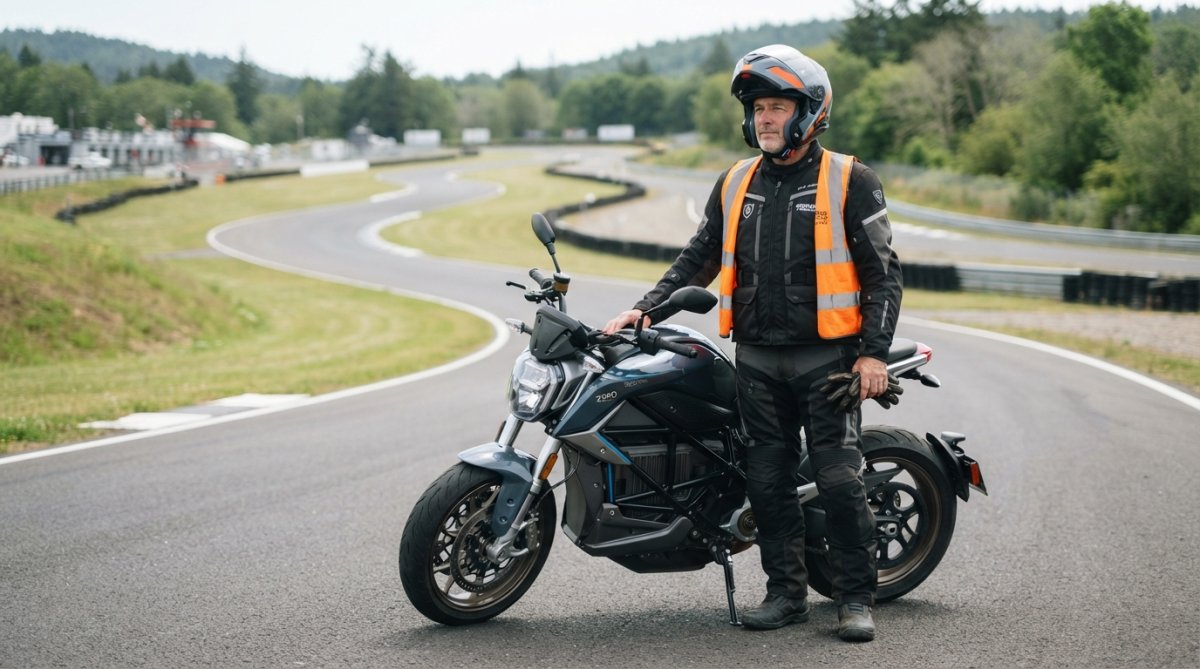
Test ride both. Monarch Powersports offers private circuit demo sessions where you can experience different platforms in a controlled environment. Feel how each responds to your inputs and notice which feels more intuitive.
Rebuilding Confidence After a Long Hiatus
Confidence determines whether you'll enjoy returning to riding at fifty. It rebuilds faster than expected if you approach it systematically.
Start small. Your first ride should be in an empty parking lot or quiet residential street. Spend thirty minutes getting reacquainted with how the bike responds to steering, acceleration, and braking.
Progress gradually: quiet neighborhood roads, busier roads with turns, then highway merges. This progression gives your nervous system time to recalibrate through repeated small successes.
Expect some rust. Your first emergency braking or highway merge might feel messier or scarier than expected. These moments show you what to practice, they're data, not failures.
Talk to other returning riders. They understand the specific anxiety of getting back on a bike after years away and can normalize the experience.
Gear, Safety Equipment, and Modern Technology
Modern safety gear is dramatically better than what existed twenty or thirty years ago.
Start with a quality helmet that meets DOT standards and fits properly. Modern helmets offer better ventilation, noise isolation, and impact protection.
Add a safety vest using impact-absorbing foam or airbag technology, which significantly reduces injury risk.
Gloves, boots, and riding pants matter significantly. Together, they're the difference between walking away from a crash and spending months in physical therapy.
Modern technology adds another layer.
Creating a Realistic Schedule and Setting Achievable Goals
The biggest mistake returning riders over fifty make is expecting too much too soon. You have time. You don't have to prove anything to anyone. You can progress at a pace that feels sustainable and actually enjoyable.
Frequently Asked Questions
Is it safe to start riding motorcycles again at 50?
Yes, returning to riding at fifty is safe when you approach it methodically. The key is assessing your current fitness level, taking a refresher safety course, and starting on a motorcycle suited to your experience and physical capabilities. Modern motorcycles include stability control and ABS technology that benefit riders of all ages. Work with a certified instructor to rebuild muscle memory and confidence gradually.
What motorcycle riding fitness exercises should I do before returning?
Focus on core stability, balance, and flexibility. Practice planks, bridges, and rotational exercises to strengthen your core. Do balance work like single-leg stands or yoga to improve proprioception. Stretch your hips, shoulders, and lower back regularly to maintain joint health. Grip strength exercises using hand grippers prepare your forearms and hands for sustained riding. Start these exercises 4-6 weeks before your first ride back.
What are the best beginner motorcycles for older riders returning after a break?
Look for motorcycles with a lower seat height (28-31 inches), upright riding position, and manageable power delivery. Electric motorcycles from brands like Zero Motorcycles offer smooth, predictable torque with no gear shifting, reducing cognitive load. Lightweight models (under 400 lbs) make handling easier and reduce fatigue. Mid-range displacement bikes (300-500cc) provide enough power without overwhelming you. Test ride multiple options to find what feels comfortable for your body and riding style.
Do I need to take a motorcycle safety course if I rode before?
Yes. Even experienced riders benefit from a refresher course after a long break. Motorcycle safety courses for seniors are specifically designed to address age-related changes in reaction time and physical capability. You'll relearn current safety practices, modern braking techniques, and hazard awareness. Many insurance companies offer discounts for course completion, and you'll rebuild confidence in a controlled environment with professional instruction.