 ultimate-guide
Professional Motorcycle Calibration: Benefits & Performance Gains
Table of Contents
- What Professional Motorcycle Calibration Actually Does
- Motorcycle ECU Tuning Benefits: Engine Performance and Efficiency
- Professional Suspension Setup vs Factory Settings
- How Calibration Extends Engine Longevity and Reduces Wear
- Signs Your Motorcycle Needs a Professional Tune-Up
- Digital vs. Analog Calibration: Understanding Your Options
- DIY vs. Professional Calibration: When to Call a Technician
- Conclusion
- Frequently Asked Questions
Last Updated: September 3, 2026
What Professional Motorcycle Calibration Actually Does
Professional motorcycle calibration fine-tunes your bike's engine management system, suspension geometry, and brake settings to match your riding style, weight, and performance goals. Unlike factory defaults designed for average riders, calibration adjusts critical parameters like fuel-to-air ratio, throttle response mapping, suspension sag, and brake pad pressure to unlock precision performance tailored specifically to you.
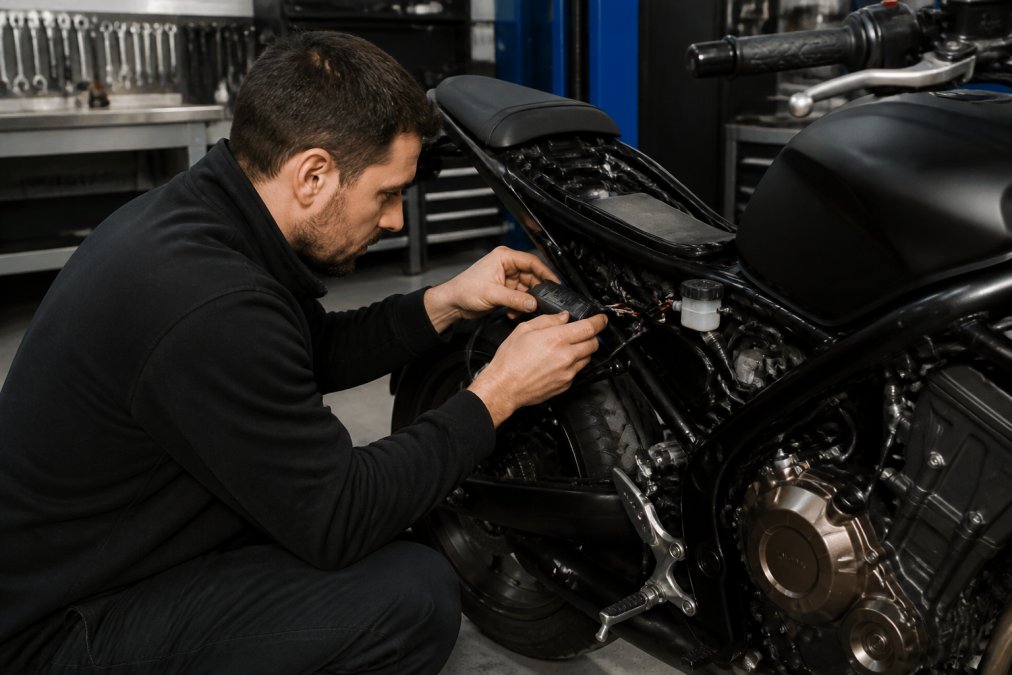
When you calibrate a motorcycle professionally, you're making measurable changes to how the engine delivers torque, how the chassis handles cornering forces, and how quickly the bike responds to your inputs. A certified technician uses diagnostic tools to read your bike's ECU data, measure suspension geometry, and test brake performance under controlled conditions. The result is a motorcycle that feels like it was built for you, not for a hypothetical average rider.
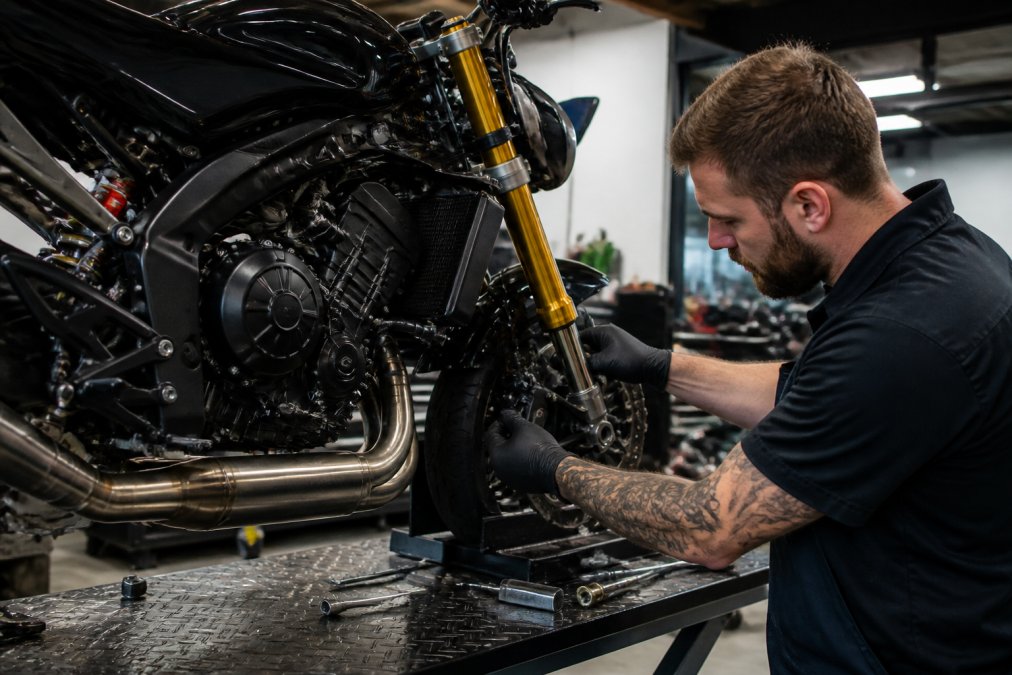
Factory settings are compromises designed to work acceptably across different rider weights, skill levels, and riding conditions. A 140-pound rider and a 220-pound rider experience completely different suspension behavior on the same bike. Professional motorcycle calibration corrects these mismatches.
The process typically involves three core adjustments. First, engine mapping through ECU tuning adjusts how fuel injectors spray fuel and when spark plugs fire, optimizing horsepower output and fuel efficiency for your riding pattern. Second, suspension calibration sets ride height (sag), dampening stiffness, and spring preload based on your weight and preferred handling feel. Third, brake calibration ensures your ABS system and brake pad engagement match your braking style and safety protocols.
Motorcycle ECU Tuning Benefits: Engine Performance and Efficiency
ECU tuning rewrites your bike's fuel and ignition maps to extract more horsepower, sharper throttle response, and better fuel efficiency. Your engine control unit (ECU) manages fuel injection timing, ignition timing, and throttle response through thousands of calculations per second. Factory ECU maps are conservative, designed to pass emissions tests and survive warranty periods. A well-executed tune can improve usable torque output, depending on your bike's engine design.
Throttle response improvement is where riders feel the biggest difference. Factory ECU mapping includes lag, a slight delay between twisting the throttle and the engine responding. Professional ECU tuning removes that lag, making the engine respond instantly to your input (sae.org). On a sport bike, this transforms the riding experience. On a cruiser, it makes low-speed maneuvering smoother and more intuitive.
Fuel efficiency gains from professional motorcycle calibration optimize the fuel-to-air ratio for your actual riding pattern. If you mostly ride highways, the tune leans out the mixture for better mileage. If you ride aggressively, it enriches the mixture slightly for safety. The result is better efficiency in your specific use case, even if peak power increases.
ECU tuning quality varies dramatically. A cheap tune from a generic software vendor might add horsepower on a dyno but create flat spots in mid-range power or trigger check-engine lights. Professional motorcycle calibration from certified technicians includes dyno testing, real-world validation, and ongoing support.
Professional Suspension Setup vs Factory Settings
Factory suspension settings are generic starting points, not optimization. Motorcycle manufacturers set suspension parameters for an imaginary average rider of medium weight and skill level. If you're heavier, lighter, more aggressive, or more cautious than that phantom rider, your suspension is fighting against you.
Professional suspension setup begins with measuring suspension sag, the amount your bike settles under its own weight plus rider weight. Factory specs assume a 180-pound rider (sae.org). A certified technician measures your sag and adjusts spring preload to match your actual weight (peer-reviewed research).
Dampening settings control how quickly your suspension compresses and extends. Compression dampening resists the suspension collapsing under braking or cornering load. Extension dampening controls how quickly the suspension rebounds. Professional motorcycle calibration adjusts both independently based on your riding style. A track day rider might want stiff compression dampening for stability under hard cornering, but soft extension dampening for quick rebound.
The difference between factory and professionally calibrated suspension shows up immediately in cornering confidence and braking stability. Factory suspension often feels vague in corners. Professional setup makes the bike feel planted and communicative. You know exactly how much lean angle you're carrying and how much cornering load the tires can handle.
Properly tuned suspension reduces mechanical wear on your frame, swingarm, and steering head bearings. When suspension geometry is mismatched to your weight, it creates stress concentrations that accelerate fatigue cracking. Correct suspension setup distributes forces evenly, extending the life of critical components.
How Calibration Extends Engine Longevity and Reduces Wear
A properly calibrated engine lasts longer and requires less maintenance than a factory-mapped one. Factory ECU maps run rich (extra fuel) as a safety margin. Extra fuel cools the combustion chamber and reduces detonation risk, but it also leaves unburned fuel residue that builds carbon deposits on intake valves and piston rings. A professional ECU tune optimizes the fuel-to-air ratio, reducing carbon buildup and keeping combustion cleaner.
Ignition timing calibration prevents detonation, uncontrolled fuel ignition that creates shock waves inside the cylinder. Factory ignition maps are conservative to avoid detonation under worst-case conditions. Professional motorcycle calibration adjusts ignition timing more aggressively, improving combustion efficiency without risking detonation in normal conditions. This reduces heat stress on pistons and cylinder walls.
Oil temperatures are another longevity factor. Professional calibration monitors oil temperature and adjusts engine load to keep it in the optimal range. Cooler oil lasts longer, provides better lubrication, and reduces oxidation that thickens oil and increases friction.
Preventative maintenance intervals can extend with professional motorcycle calibration. A well-tuned engine produces less heat, carbon, and mechanical stress. Oil change intervals can stretch longer. Spark plugs last longer. Fuel filters stay cleaner. Over time, the compounding effect can be significant, with reduced service costs and better reliability. complete maintenance guide.
Engines running optimized calibration experience less thermal stress, less detonation risk, and cleaner combustion. These conditions reduce the likelihood of catastrophic failures like piston seizure, valve float, or bearing wear. For riders who push their bikes hard, professional motorcycle calibration is cheap insurance against expensive engine damage.
Signs Your Motorcycle Needs a Professional Tune-Up
Uneven throttle response is the most obvious sign. If your bike feels sluggish off idle but aggressive mid-range, or if there's a noticeable delay between throttle input and engine response, your ECU map needs adjustment. A professional tune smooths out these inconsistencies.
Suspension that feels harsh over bumps or wallows in corners suggests your sag and dampening settings don't match your weight and riding style. If your bike bounces excessively after hitting bumps, your extension dampening is too soft. If it feels harsh and jarring, your compression dampening is too stiff.
Poor fuel economy despite normal riding patterns often indicates a rich fuel map. Professional ECU tuning could improve efficiency.
Difficulty controlling the bike at low speeds, especially in parking lots or slow-speed maneuvers, suggests throttle response tuning could help. Many bikes have dead zones in the throttle where small inputs produce no response, followed by sudden power delivery. Professional ECU calibration smooths these transitions.
Inconsistent braking feel or ABS triggering during normal braking indicates your brake system needs professional calibration. If your ABS engages too early or too late, a certified technician can recalibrate the system.
Excessive mechanical wear or frequent repairs despite normal maintenance suggest your bike is working harder than it should. Professional calibration optimizes engine load, suspension geometry, and brake performance, reducing stress on components.
Digital vs. Analog Calibration: Understanding Your Options
Modern motorcycles use digital ECU systems that manage engine parameters through software. Digital calibration through ECU tuning offers precision and repeatability that analog methods can't match. A certified technician connects diagnostic equipment to your bike's ECU, reads the current fuel and ignition maps, and uploads optimized maps tailored to your specific engine serial number, air intake setup, and exhaust configuration. The changes are repeatable and reversible.
Digital calibration also enables real-time monitoring. Modern ECU systems log engine parameters, fuel pressure, ignition timing, air intake temperature, and throttle position. A technician can review your riding data and make informed adjustments. This data-driven approach produces better results than guesswork.
Analog calibration involves mechanical adjustments: carburetor jet sizing, ignition advance curve modifications, suspension spring and dampening changes. These adjustments are permanent and require mechanical knowledge to reverse. Analog calibration works well for riders who understand their bike's systems, but it's less precise than digital methods.
If your bike has an ECU (most bikes built after 2005), digital calibration is the better choice. If you ride a vintage bike with a carburetor, analog calibration is your only option. Digital methods produce superior results with less guesswork.
One consideration: digital ECU tuning can void manufacturer warranties on some bikes. Professional technicians can usually restore factory ECU maps if warranty service becomes necessary.
DIY vs. Professional Calibration: When to Call a Technician
Suspension sag measurement is straightforward enough for a motivated rider with basic tools. You measure how much your bike settles under its own weight and with you sitting on it, then adjust spring preload accordingly. This is a reasonable DIY project if you're mechanically inclined.
ECU tuning is where DIY becomes risky. Generic ECU tuning software is available online, but applying it to your specific bike without proper diagnostic equipment and validation is gambling. A poorly executed tune can create flat spots in power delivery, trigger check-engine lights, or damage your engine. The cost of fixing a bad tune often exceeds what you'd pay a professional.
Brake calibration should always be professional. Your braking system is safety-critical, and ABS recalibration requires specialized diagnostic equipment and test procedures. A mistake here could reduce braking performance or cause ABS to malfunction at critical moments.
The threshold between DIY and professional is skill level and equipment. If you have mechanical experience, proper tools, and access to a dyno for validation, some calibration work is DIY-feasible. If you don't, professional motorcycle calibration is the right choice. A certified technician has the diagnostic equipment, experience with your specific bike model, and liability insurance to back up their work.
For specific pricing information on professional suspension setup or ECU tuning, please visit our website or contact us directly. Pricing depends on the specific services required and the motorcycle model.
Conclusion
Professional motorcycle calibration transforms how your bike feels and performs. Whether you're optimizing engine mapping for better throttle response and fuel efficiency, adjusting suspension to match your weight and riding style, or fine-tuning your brake system for confidence and safety, calibration delivers measurable improvements that factory settings simply can't provide.
The benefits compound: better handling dynamics improve your control and confidence. Optimized engine mapping extends mechanical longevity and reduces maintenance costs. Precise brake calibration enhances safety. Together, these adjustments make your motorcycle feel like it was engineered specifically for you, because it has been.
At Monarch Powersports, we understand that professional motorcycle calibration isn't a luxury, it's the foundation of a truly dialed-in ride. Our certified technicians specialize in precision calibration for Stark Future electric motorcycles, Zero Motorcycles, and Husqvarna performance bikes. We use diagnostic equipment and dyno testing to optimize your bike's ECU tuning, suspension geometry, and brake performance for your exact specifications. Whether you're looking to improve handling dynamics, extract more horsepower, or extend your engine's longevity, we dial in every detail. Schedule a test ride and experience the difference professional calibration makes.
Frequently Asked Questions
Q: What are the primary benefits of professional motorcycle calibration?
A: Professional motorcycle calibration optimizes engine mapping, suspension geometry, and throttle response to match your riding style and bike specifications. Key benefits include improved fuel efficiency, sharper handling precision, reduced mechanical wear, and enhanced safety through better traction control and ABS calibration. Riders typically experience more responsive torque delivery and a smoother ride quality tailored to their weight and preferences.
Q: How does professional calibration differ from a standard tune-up?
A: A standard tune-up replaces spark plugs, filters, and fluid levels. Professional calibration goes deeper, adjusting ECU parameters, suspension dampening settings, sensor calibration, and brake pad performance. It uses diagnostic tools and telemetry data to fine-tune engine mapping and handling dynamics specifically for your motorcycle model and riding conditions, resulting in measurable performance gains that a basic tune-up cannot achieve.
Q: Is professional motorcycle calibration worth the investment for street riders?
A: Yes. Street riders benefit significantly from calibration through improved fuel efficiency, enhanced safety via optimized traction control and ABS settings, and longer service intervals due to reduced mechanical wear. Even casual riders notice sharper throttle response and better ride comfort. The investment can lead to lower fuel costs, fewer repairs, and a more enjoyable riding experience over the bike's lifetime.
Q: How often should a motorcycle undergo professional calibration?
A: Most motorcycles benefit from professional calibration after major modifications (engine upgrades, suspension changes) or every 12,000-15,000 miles for performance-oriented riders. Street riders should recalibrate annually or when experiencing symptoms like poor fuel economy, sluggish throttle response, or handling inconsistency. Always recalibrate after accident repairs or component replacements to ensure sensor accuracy and chassis balance.
This article was written using GrandRanker