
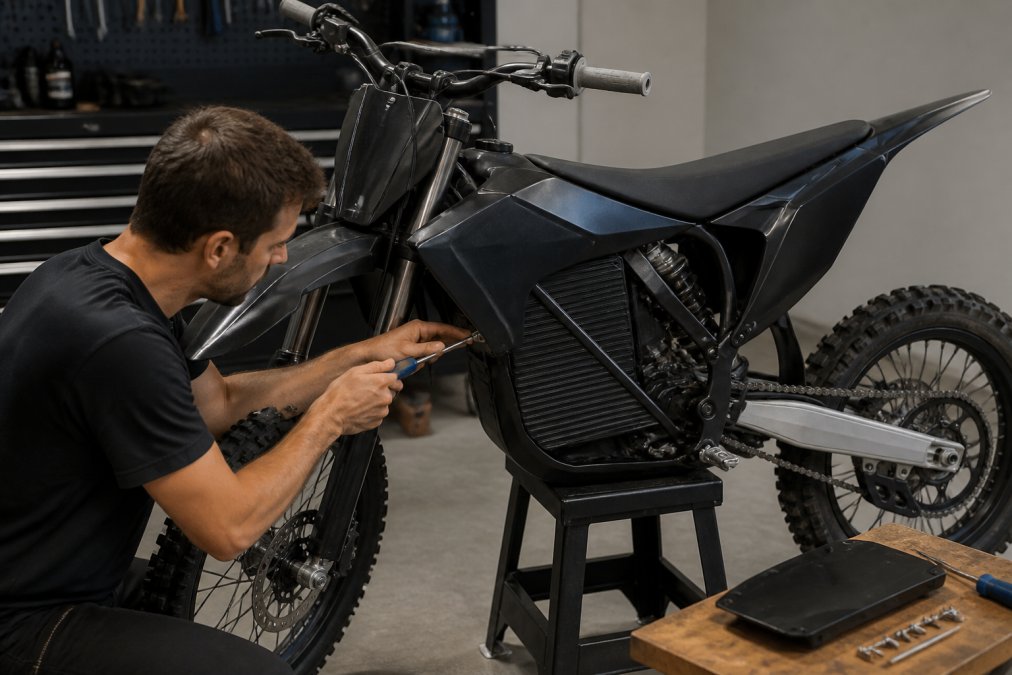
 comparison
Is Electric Motorcycle Maintenance Cheaper Than Gas?
Table of Contents
- Electric Motorcycle vs Gas Maintenance Schedule: What Each One Actually Requires
- Cost Breakdown: Oil Changes, Spark Plugs, and Fluid Replacement vs Electric Simplicity
- Electric Motorcycle Battery Replacement Cost: The Hidden Expense Competitors Ignore
- Tire Wear, Weight, and Regenerative Braking: Maintenance Differences Riders Miss
- DIY vs Dealer Serviceability: Which Platform Keeps You Riding Longer?
- Long-Term Ownership Savings and Resale Value Considerations
- Conclusion: Is Electric Motorcycle Maintenance Cheaper Than Gas for You?
- Frequently Asked Questions
Last Updated: September 10, 2026
Electric Motorcycle vs Gas Maintenance Schedule: What Each One Actually Requires
Whether electric motorcycle maintenance is cheaper than gas comes down to one structural fact: an electric powertrain eliminates most routine service items that dominate a gas bike's ownership costs. This guide from Monarch Powersports breaks down what each platform requires, where hidden expenses sit, and how to calculate your own cost-per-mile.
A gas motorcycle depends on a combustion engine with hundreds of moving parts: pistons, valves, camshafts, a transmission, and an exhaust. An electric motorcycle replaces that assembly with a motor, a controller, and a battery pack. Fewer components means fewer service intervals, and that difference drives nearly every cost comparison that follows.
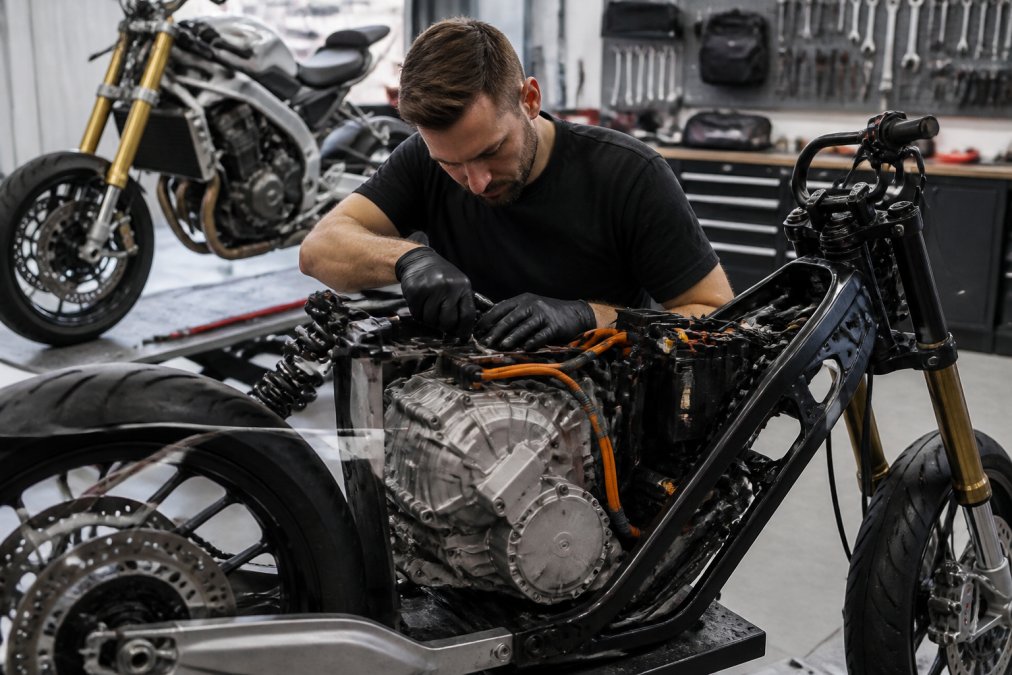
Gas Motorcycle Service Intervals and Components
Gas bikes follow a maintenance calendar built around engine wear: oil and filter changes every few thousand miles, spark plug replacement, valve clearance checks, air filter cleaning, chain or belt adjustment, and coolant flushes on liquid-cooled models. Transmission fluid and clutch wear add further events. Each is a recurring line item, and skipping them risks long-term reliability.
Electric Motorcycle Service Intervals and Components
Electric motorcycles invert that schedule. A direct-drive powertrain has no oil, no spark plugs, and no transmission to service. What remains is a shorter list: brake fluid checks, tire pressure and tread inspection, brake pad wear, suspension service, and battery health monitoring. Regenerative braking further reduces brake pad wear because the motor handles much of the deceleration (energy.gov). Scheduled maintenance on an electric bike is measured in inspections, not replacements.
| Platform | Routine Service Items | Typical Service Cadence |
|---|---|---|
| Gas motorcycle | Oil changes, spark plugs, air filter, valve checks, chain/belt, coolant | Frequent, mileage-based |
| Electric motorcycle | Brake fluid, tires, brake pads, suspension, battery health | Infrequent, inspection-based |
Cost Breakdown: Oil Changes, Spark Plugs, and Fluid Replacement vs Electric Simplicity
Electric maintenance tends to win on paper not because any single gas service item is expensive, but because gas items recur on a mileage clock while electric items mostly do not. To see the gap, build the schedule over a realistic ownership window rather than comparing one oil change to one inspection.
What a Gas Bike Actually Spends On
A typical gas commuter motorcycle accumulates these recurring events over a 3-year, 15,000-mile window:
- Engine oil and filter: most manufacturers specify intervals in the 3,000-8,000 mile range depending on oil type and riding conditions. A high-mileage commuter commonly lands on 3-5 oil services over 15,000 miles. Parts plus labor at a dealership runs about a modest shop visit each time; DIY cuts the labor but not the oil and filter.
- Spark plugs: replaced on a mileage or time interval, often bundled into a valve-check service. Plugs are inexpensive; the labor to reach them on a faired or V-twin bike is not.
- Valve clearance checks: the largest scheduled line item on many gas bikes. Intervals vary by model, and out-of-spec valves require labor-intensive shim or adjuster work.
- Air filter: cleanable or replaceable depending on model; recurs alongside oil services.
- Coolant flush: liquid-cooled models only, typically on a multi-year interval.
- Chain and sprockets or belt: chains need continuous adjustment and lubrication plus replacement as a set; belts last longer but cost more.
- Clutch and transmission: clutch plates wear with use; transmission fluid service applies to some designs.
Stack those events and the gas bike pays for parts and labor on a predictable calendar whether or not anything is wrong.
What an Electric Bike Actually Spends On
An electric motorcycle with a direct-drive powertrain deletes that entire list: no engine oil, oil filter, spark plugs, air filter, valve train, engine coolant loop, clutch, or multi-speed transmission to service. What remains is a short inspection list:
- Brake fluid condition and level
- Brake pad thickness
- Tire pressure and tread
- Suspension seals, sag, and damping
- Drive belt or chain on models that use one
- Battery state-of-health and firmware version
Most are checks, not replacements. The parts spend that dominates gas ownership, oil, filters, plugs, coolant, clutch friction material, does not exist on the electric side.
Where the Electric Side Can Still Cost You
The counterweight: electric service is less DIY-friendly for anything electronic. Battery management system diagnostics, motor controller faults, and firmware updates generally require manufacturer software and a dealer relationship. So while recurring parts spend collapses, any single electronics repair can cost more than the equivalent gas repair, because the independent-shop ecosystem for electric powertrains is still thin.
The Energy Side of the Equation
Maintenance is only half the operating-cost story. Per mile, electricity is generally cheaper than gasoline, and the gap depends on two variables you control: your local utility rate and your bike's efficiency in miles per kilowatt-hour. A rider on a low off-peak rate charging overnight sees a meaningfully lower cost per mile than one paying a high flat rate and fast-charging on the road. Gas prices move with the market and regional supply, making the gas side less predictable year to year.
Electric Motorcycle Battery Replacement Cost: The Hidden Expense Competitors Ignore
Most maintenance comparisons stop at 'no oil changes' and never price the component that can flip the math: the battery pack. It is the single most important number a prospective electric owner needs to understand before signing.
Why Packs Degrade
A lithium-ion pack loses capacity through two compounding mechanisms: (batteryuniversity.com)
- Cycle aging: every full charge-and-discharge cycle consumes usable capacity. Partial cycles count fractionally, so shallow top-ups are gentler than full 0-100% sweeps.
- Calendar aging: capacity fades with time regardless of use, accelerating at high state of charge and high temperature. A pack stored at 100% in a hot garage ages faster than one stored at 50% in a cool one (peer-reviewed research).
So a low-mileage bike can still have a degraded pack if it sat fully charged in the heat, while a high-mileage bike ridden gently and stored correctly can retain more capacity than its odometer suggests.
What Replacement Actually Costs
Battery replacement cost scales with pack size, chemistry, and whether the manufacturer sells the pack as a serviceable unit or part of a sealed assembly. On premium electric motorcycles the pack is a major fraction of the original price, so a replacement can exceed several years of gas maintenance savings in one event. On smaller commuter-class bikes with modular packs, the number is proportionally lower. The battery is the one line item large enough to erase the maintenance advantage if it fails early.
How to Read the Warranty
The battery warranty is the manufacturer's own estimate of pack lifespan and the most useful signal a buyer has. Look for three things:
- Term: how many years and how many miles the coverage runs.
- Retention threshold: the minimum capacity the maker guarantees over that term. A warranty that promises a specific percentage of original capacity is far more meaningful than one that only covers outright failure.
- Transferability: whether coverage follows the bike to a second owner. A transferable warranty materially protects resale value.
Protecting the Pack You Own
- Keep state of charge in the middle band for daily storage rather than topping to 100% and leaving it.
- Avoid sustained extreme heat; shade and climate-controlled storage measurably slow calendar aging.
- Use the manufacturer's charge recommendations and any charge-limit settings.
- Install over-the-air firmware updates, which refine range estimation and charge management.
- Request a state-of-health reading at every service so you have a documented trend, not a snapshot.
The DIY and Dealer-Serviceability Angle
Battery work is where electric ownership diverges most sharply from gas. A gas owner can change oil, plugs, and a chain at home with hand tools and a service manual. An electric owner generally cannot diagnose a battery management system or flash a motor controller without manufacturer software and dealer authorization. The maintenance savings are real, but they come bundled with dealer dependency for anything electronic, a trade-off worth weighing if you value self-sufficiency.
Tire Wear, Weight, and Regenerative Braking: Maintenance Differences Riders Miss
Tire wear on an electric motorcycle often runs faster than riders expect. Battery packs add weight, and instant torque stresses the rear tire, so some electric riders replace tires sooner than on a comparable gas bike. Regenerative braking offsets this by reducing brake pad wear, but does nothing for the rubber itself.
This is where the cost comparison gets honest. Electric ownership saves on engine service but can spend more on consumables like tires, and the net effect depends on how you ride. A smooth commuter who uses regenerative braking well sees lower total costs; an aggressive rider who exploits instant torque burns through rear tires faster.
DIY vs Dealer Serviceability: Which Platform Keeps You Riding Longer?
Gas motorcycles have a deep aftermarket and many independent shops, so owners who do their own oil changes and chain adjustments keep costs very low. Electric motorcycles simplify the drivetrain so there is far less to service yourself, but remaining work like battery diagnostics and motor controller updates usually needs dealer software.
For riders who value time over tinkering, electric serviceability is a clear win: fewer trips to the shop and less time under the bike. For riders who enjoy hands-on maintenance, gas still offers more to do and a wider support network. Monarch Powersports provides certified technicians for ride calibration and setup.
Long-Term Ownership Savings and Resale Value Considerations
Long-term ownership savings on an electric motorcycle come primarily from avoided engine service and lower energy consumption per mile. Electricity typically costs less per mile than gasoline, and the absence of oil changes, spark plugs, and fluid replacement compounds over years of commuting. High-mileage riders see the largest advantage.
Resale value cuts the other way. Battery health heavily influences what an electric bike is worth used, and buyers discount packs with unknown history. Gas motorcycles have a mature resale market with predictable depreciation. The strongest resale strategy for electric owners is documented battery care and a clean service record. Monarch Powersports supports owners with professional calibration and setup.
Conclusion: Is Electric Motorcycle Maintenance Cheaper Than Gas for You?
For most high-mileage commuters, electric motorcycle maintenance is cheaper than gas over the full ownership period, because the recurring engine service that dominates gas costs simply does not exist on an electric powertrain. The exception is the rider who ignores battery health and faces a premature replacement, or the aggressive rider who spends the savings on rear tires.
If you want to see the difference firsthand rather than estimate it, Monarch Powersports offers private circuit demo sessions on platforms from Stark Future, Zero Motorcycles, and Husqvarna, with certified technicians who calibrate each bike to your specifications. Financing runs through secure 700Credit technology with instant decisions, so you can compare the real cost of electric and gas ownership before committing. Schedule a test ride with Monarch Powersports and let the torque delivery answer the question for you.
Frequently Asked Questions
What are the primary maintenance differences between electric and gas motorcycles?
Gas motorcycles require regular oil changes, spark plug replacements, air filter cleaning, and valve adjustments. Electric motorcycles eliminate these tasks because they have no combustion engine, transmission, or exhaust system. Electric models still need tire checks, brake fluid replacement, and occasional coolant service, but the overall list is much shorter. According to Zero Motorcycles, their direct-drive powertrain requires no oil changes, spark plugs, or timing belt adjustments, significantly reducing scheduled maintenance.
How does the lifespan of an electric motorcycle battery affect long-term costs?
Battery replacement is the largest potential maintenance expense for an electric motorcycle. Most manufacturers design batteries to last many years, but degradation reduces range over time. The cost to replace a battery can range from $3,000 to $8,000 depending on the model and capacity. This expense can offset some fuel and service savings, so it is important to factor battery health into total cost of ownership. Regular charging habits and avoiding extreme temperatures can extend battery life.
Do electric motorcycles require less frequent servicing than combustion engines?
Yes. Electric motorcycles typically have longer service intervals because they lack oil, spark plugs, and valve trains. For example, Zero Motorcycles recommends service every 12 months or 4,000 miles, while many gas motorcycles require oil changes every 3,000 to 5,000 miles. Regenerative braking also reduces brake pad wear, further lowering service frequency. However, electric bikes still need periodic checks of brake fluid, tires, and battery health.
How do regenerative braking systems impact brake pad wear on electric motorcycles?
Regenerative braking uses the motor to slow the bike, recovering energy and reducing reliance on physical brake pads. This can extend brake pad life significantly compared to gas motorcycles, where all braking force comes from friction. Riders who rely heavily on regenerative braking may see brake pads last twice as long. Still, brake pads should be inspected regularly, as they can wear unevenly or degrade from age regardless of use.
Is insurance for an electric motorcycle more expensive than a gas model?
Insurance costs for electric motorcycles can be higher than for comparable gas models because of higher purchase prices and specialized repair costs. However, some insurers offer discounts for electric vehicles. The difference varies by provider and rider profile. It is best to get quotes for specific models you are considering. Maintenance savings may offset higher premiums over time, but insurance should be factored into your total cost of ownership.