 how-to
How Long Does a Circuit Test Ride Take? 2026 Guide
Table of Contents
- How Long Does a Circuit Test Ride Take? A Realistic Timeline
- Motorcycle Demo Ride Requirements You Should Know Before You Arrive
- Stark Future vs Zero Motorcycles Test Ride: What Changes on the Clock
- What Stretches a Circuit Test Ride Past the Average
- How Long Does a Test Light Take to Diagnose a Faulty Circuit?
- How to Book a Private Circuit Test Ride Without Wasting a Trip
- Frequently Asked Questions
Last Updated: September 17, 2026
How Long Does a Circuit Test Ride Take? A Realistic Timeline
A circuit test ride typically includes check-in, gear fitting, a safety briefing, track time, and cool-down. Unprepared riders may experience delays due to paperwork and equipment swaps.
The clock starts before you throw a leg over the bike. At Monarch Powersports, we run private circuit demo sessions for riders comparing electric platforms against combustion machines, and the biggest variable in how long a circuit test ride takes is not the motorcycle, it is the rider's preparation.
Below: the full timeline, the demo ride requirements to satisfy before you arrive, and what stretches a session past the average.
Check-In, Gear Fitting, and the Rider Briefing
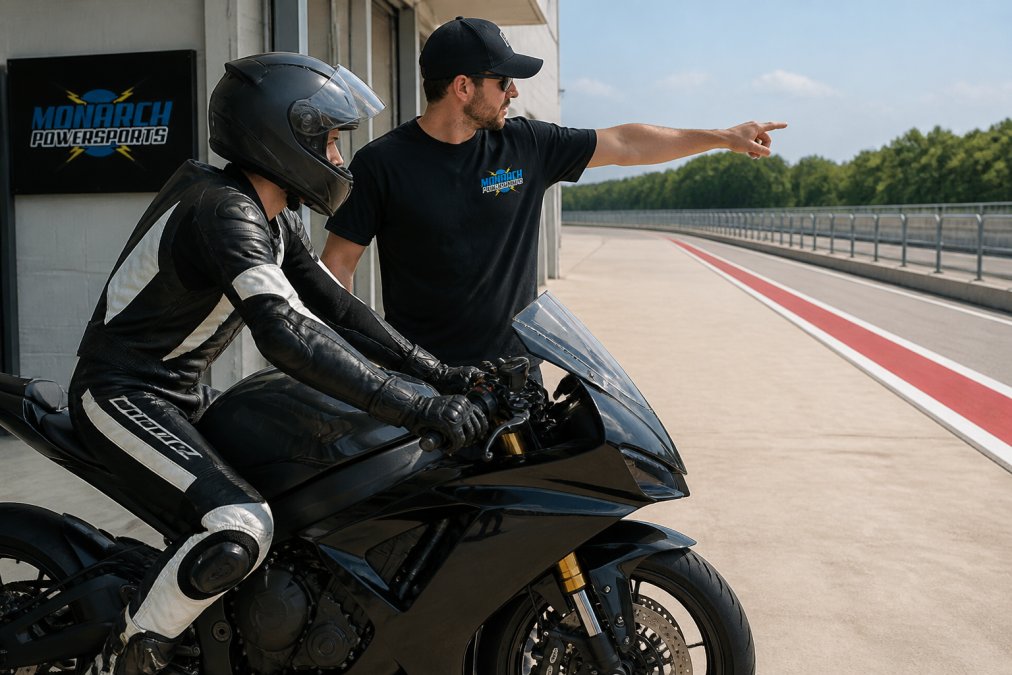
Check-in and gear fitting consume 20 to 35 minutes on a first visit: license and endorsement check, liability waiver, and helmet and jacket fitting if you borrow loaner gear. Returning riders with their own gear and a waiver on file compress this to 10 to 15 minutes.
The rider briefing adds 10 to 15 minutes: track layout, flag signals, passing rules, and the throttle and brake behavior of your bike. On an electric machine this matters more, because regenerative braking and instant torque change how you enter and exit corners.
Track Time and Cool-Down
Track time runs 20 to 40 minutes, split into two or three stints with a breather between them. Beginners get more laps at lower speed; experienced riders get fewer, faster stints.
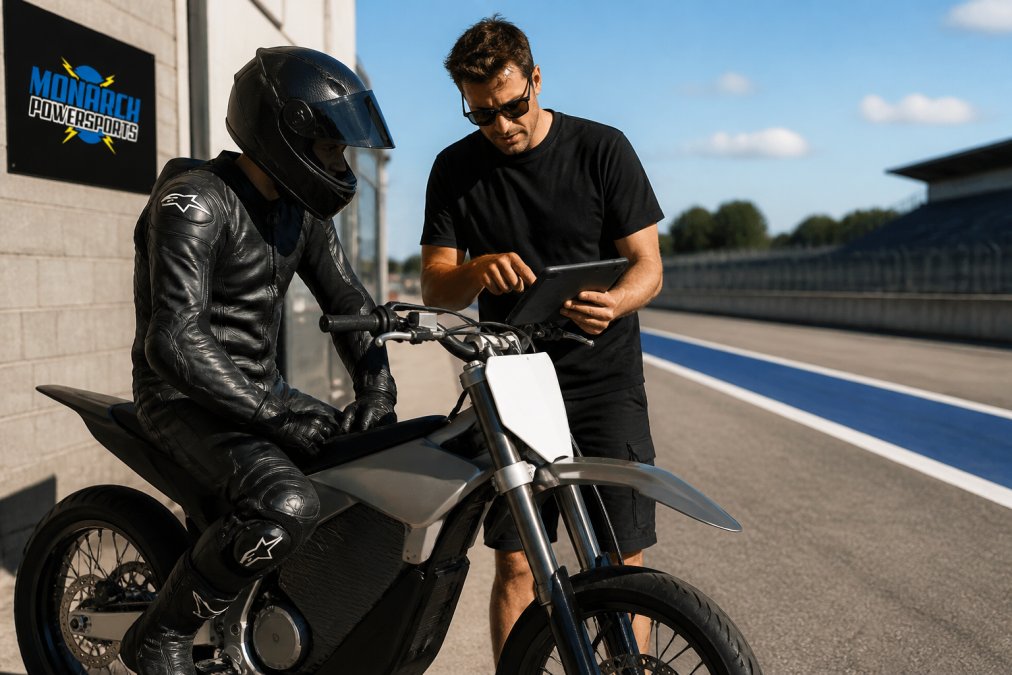
Cool-down and debrief take 10 to 20 minutes, as a technician walks through suspension and throttle mapping adjustments and answers questions that only surface after you have ridden the bike.
How Long by Rider Experience and Session Format
The total varies predictably by who is riding and what they came to do. Use the ranges below as a planning baseline, not a guarantee, track density, weather, and staffing all move the number.
| Rider Profile | Typical Total Time | Track Time | What Drives the Difference |
|---|---|---|---|
| First-time demo rider, one bike | 90-120 min | 20-30 min | Longer check-in, gear fitting, and briefing |
| Experienced rider, own gear, one bike | 75-105 min | 30-40 min | Faster check-in, longer stints |
| Rider comparing two bikes | 2-2.5 hours | 40-60 min | Second briefing and separate stint per bike |
| Rider comparing three bikes | 2.5-3 hours | 60-90 min | Cumulative briefings, stints, and debriefs |
| Rider requesting calibration | Add 15-30 min | Same | Suspension and throttle mapping to rider weight |
| Rider adding a financing conversation | Add 15-25 min | Same | Budget review and pre-qualification |
A few patterns hold across most programs. Morning sessions run closer to the low end because staff are fresh and the track is less crowded; afternoon sessions on busy weekends push toward the high end. If your schedule is tight, book the first slot of the day.
The Time Cost of Arriving Unprepared
The most common time sink is the paperwork and gear scramble when a rider shows up without a current endorsement, a compliant helmet, or the required boots. Each missing item can add delays or end the session entirely.
To protect your window, treat the appointment like a flight: arrive 15 minutes early, have your license and waiver ready, and confirm your gear meets the program's standard the day before. That habit is usually the difference between a 90-minute visit and a three-hour one.
Motorcycle Demo Ride Requirements You Should Know Before You Arrive
Motorcycle demo ride requirements are consistent across most private circuit programs: a valid motorcycle license with the correct endorsement, closed-toe boots, long pants, and a DOT-compliant helmet. Some also require a riding jacket and gloves.
Licensing, Gear, and Safety Briefings
Bring your physical license, not a photo. Most programs verify the endorsement against your ID at check-in, and a digital copy slows things down.
Gear standards are usually stricter than a casual street ride. The NHTSA motorcycle helmet guidance confirms that DOT-compliant helmets are the legal minimum, but many circuit programs require a full-face helmet regardless.
Stark Future vs Zero Motorcycles Test Ride: What Changes on the Clock
A Stark Future vs Zero Motorcycles test ride differs mainly in how quickly the bike changes your riding habits. Stark's motocross-focused platform rewards aggressive throttle input almost immediately, so riders reach useful track speed in the first stint. Zero's street-oriented lineup asks for a more gradual adjustment to regenerative braking and weight distribution.
What Stretches a Circuit Test Ride Past the Average
Three factors reliably push a session past the 90-minute mark: multiple bikes in one visit, a calibration request, and a financing conversation. Most programs do not publish time estimates for these add-ons, so riders plan around the base number and leave surprised.
Time Multipliers at a Glance
| Add-On | Typical Time Added | Why It Costs That Much |
|---|---|---|
| Second bike in the same visit | 20-30 min | Fresh briefing plus a separate track stint |
| Third bike in the same visit | 20-30 min | Same as above, compounded |
| Suspension calibration to rider weight | 15-25 min | Static sag setup, test laps, adjustment |
| Throttle mapping or brake feel adjustment | 10-20 min | Software change plus a verification stint |
| Financing pre-qualification | 15-25 min | Budget review and secure application |
| Loaner gear fitting (helmet, jacket, boots) | 10-20 min | Sizing, adjustment, and inspection |
| Travel-time buffer for out-of-area riders | 30-60 min | Arrival, parking, and orientation |
Multiple Bikes: The Biggest Multiplier
Testing two or three motorcycles in a single appointment is the largest time cost. Each additional bike adds roughly 20 to 30 minutes for a fresh briefing and a separate track stint. To compare an electric platform against a combustion machine back to back, budget closer to three hours.
Calibration: Small Time, Large Payoff
Calibration requests extend the session differently. Having a technician adjust suspension, throttle response, or brake feel to your weight and riding style adds debrief time, but the bike you leave on is set up for you rather than a generic rider.
Financing: The Wildcard
Financing conversations are the least predictable add-on. Riders who arrive knowing their budget and options wrap up quickly; riders who start cold often add 20 minutes or more.
A Simple Planning Rule
Add the base session time to the multipliers that apply to you. A first-time rider on one bike with loaner gear and a financing conversation should plan on roughly two hours; an experienced rider on one bike with their own gear and no calibration, 75 to 105 minutes. Riders who leave frustrated almost always planned for the base number and stacked three add-ons on top of it.
How Long Does a Test Light Take to Diagnose a Faulty Circuit?
A test light can diagnose a simple faulty circuit once you have located the fuse box and identified the correct circuit. The tool is fast; finding the right access point is what takes time.
The workflow is short:
- Clip the alligator clip to a known good ground
- Probe the circuit at the fuse box or connector
- Watch the bulb or LED for illumination
- Move upstream or downstream to isolate the break
Test Light vs. Multimeter: Time Differences
A multimeter may take longer than a test light for basic voltage checks because it returns a number you must interpret rather than a yes-or-no result.
How to Book a Private Circuit Test Ride Without Wasting a Trip
Booking a private circuit test ride without wasting a trip comes down to three things: confirm the bike is available, confirm your gear meets the program's standard, and confirm your license endorsement is current before you drive out.
Frequently Asked Questions
How long does a typical private circuit test ride last?
A private circuit test ride includes check-in, gear fitting, a safety briefing, track time, and a debrief. Sessions with professional calibration or extended one-on-one coaching may take longer. Booking ahead helps ensure your slot is reserved and the bike is prepared before you arrive.
What should I bring to a motorcycle demo ride?
Bring a valid motorcycle license, your own helmet if you prefer a specific fit, and riding gear that meets track standards: jacket, gloves, boots, and eye protection. Most private circuits provide loaner gear, but sizing is limited. Arrive 15 minutes early to complete paperwork. If you plan to discuss financing, bring a photo ID and basic income information so the process moves quickly.
Do I need to schedule a test ride in advance?
Yes. Private circuit test rides require advance scheduling because each session includes bike preparation, technician calibration, and a reserved track window. Walk-ins are rarely accommodated. Booking online or by phone lets you choose a time, confirm gear availability, and complete pre-ride paperwork before you arrive, which can streamline the on-site check-in process.
Are electric motorcycles harder to test ride than combustion bikes?
Electric motorcycles are not harder to ride, but the power delivery feels different. Torque arrives instantly with no clutch or gear shifting, so the first few minutes require a lighter throttle hand. Most riders adjust within one or two laps. A private circuit session gives you space to learn the throttle response without traffic, and technicians can dial in power modes to match your comfort level before you roll out.