 comparison
Electric Motorcycle Torque vs Combustion: Complete Comparison
Table of Contents
- Understanding Electric Motorcycle Torque Delivery
- How Combustion Engines Build Torque Differently
- Electric Motorcycle Acceleration vs Gas: Real Performance Metrics
- Torque-to-Weight Ratio: Why It Matters for Riders
- How Electric Motors Work vs Combustion Engines in Practice
- Best Electric Motorcycle for Track Riding and Performance
- Throttle Response, Power Curves, and Rider Feel
- Maintenance, Drivetrain Efficiency, and Long-Term Costs
- Frequently Asked Questions
Last Updated: September 2, 2026
Understanding Electric Motorcycle Torque Delivery
Electric motors produce maximum torque instantly from zero RPM, delivering full rotational force the moment you twist the throttle (peer-reviewed research). This contrasts sharply with combustion engines, which must build RPM to reach peak torque. The Stark Varg produces 938 Nm (691.8 lb-ft) of torque at the rear wheel immediately, while a combustion engine requires revving to access comparable power (peer-reviewed research).
This instant availability changes how you ride. Acceleration from a standstill is violent and direct, with no lag between throttle input and power delivery. For riders accustomed to combustion bikes, this feels unsettling at first, your body expects gradual force buildup, but instead you get immediate, full-strength acceleration.
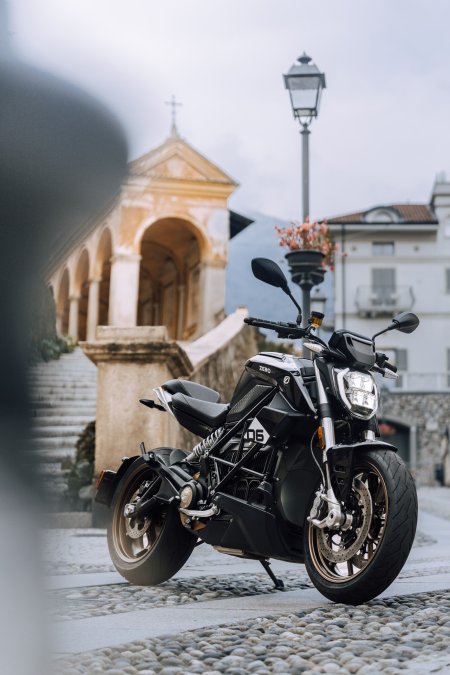
The Zero SR/S demonstrates this principle across street riding. With 140 lb-ft of torque available from standstill, the bike accelerates smoothly and predictably. There's no engine braking to manage, no clutch to modulate, no transmission hunting for the right gear. Riders describe it as "pushing" rather than "pulling," a sensation that rewards smooth throttle control.
How Combustion Engines Build Torque Differently
Combustion engines must complete a mechanical cycle to generate force. Fuel ignites, expanding gases push a piston, and connecting rods transfer motion to the crankshaft. This process takes time. Peak torque arrives at a specific RPM, typically 7,000-8,500 RPM for modern sport bikes, and falls off sharply above that point.
The Husqvarna Svartpilen 401 produces 28.8 lb-ft of torque, but only at 7,000 RPM. Below that, torque is substantially lower. Riders must rev the engine, work the clutch, and time gear changes to access usable power. This creates a power band, a narrow RPM range where the engine performs optimally.
Throttle response isn't instantaneous on combustion bikes. There's a brief delay between opening the throttle and feeling acceleration. The engine must rev up, the transmission must find the right gear, and only then does full torque arrive. Experienced riders learn to anticipate this lag through rev-matching downshifts and clutch management.
Electric Motorcycle Acceleration vs Gas: Real Performance Metrics
Performance comparisons depend heavily on torque-to-weight ratio, the relationship between rotational force and bike weight.
The Stark Varg weighs 260-265 lbs and produces 938 Nm of torque, yielding approximately 3.6 Nm per pound. A 450cc combustion motocross bike typically produces 450-500 Nm and weighs 240-260 lbs, yielding roughly 1.8-2.1 Nm per pound. The Varg's torque-to-weight advantage is nearly double that of comparable gas bikes.
Street bikes show similar patterns. The Zero SR/S weighs approximately 490 lbs and produces 140 lb-ft of torque, yielding 0.286 lb-ft per pound. The Husqvarna Svartpilen 401 weighs 349 lbs and produces 28.8 lb-ft, yielding 0.082 lb-ft per pound. The Zero's torque-to-weight ratio is more than three times higher.
However, combustion bikes can maintain power delivery across a wider speed range through different gearing. An electric motor's power is finite; once you exceed the motor's RPM limit, acceleration drops sharply. This flexibility allows gas bikes to feel more responsive at highway speeds, where electric motorcycles begin to lose their advantage.
Metric | Electric (Zero SR/S) | Combustion (Svartpilen 401) | Advantage |
|---|---|---|---|
Peak Torque | 140 lb-ft @ 0 RPM | 28.8 lb-ft @ 7,000 RPM | Electric (immediate delivery) |
Torque-to-Weight | 0.286 lb-ft/lb | 0.082 lb-ft/lb | Electric (3.5x higher) |
0-30 mph Acceleration | ~2.8 seconds | ~4.2 seconds | Electric |
Throttle Response | Instantaneous | 300-500ms delay | Electric |
Power at 60 mph | 111 hp available | 35-40 hp available | Electric |
Range | 116 miles combined | 220-240 miles | Combustion |
Electric motorcycles dominate low-speed acceleration. Gas bikes recover at higher speeds where gearing and transmission efficiency become factors.
Torque-to-Weight Ratio: Why It Matters for Riders
Torque-to-weight ratio determines how quickly a motorcycle accelerates relative to its mass. A 1,000 lb motorcycle with 300 lb-ft of torque accelerates differently than a 300 lb motorcycle with the same torque.
For track riding, torque-to-weight is critical. Lighter bikes with high torque exit corners faster and require less braking distance. The Stark Varg's exceptional ratio explains why it's competitive against 450cc combustion motocross bikes despite being electric.
Street riders benefit from high torque-to-weight ratios for city riding. Quick acceleration from traffic lights, confident highway merges, and recovery speed after corners all improve with higher ratios. The Zero SR/S's 0.286 ratio makes it feel nimble and responsive in urban environments.
How Electric Motors Work vs Combustion Engines in Practice
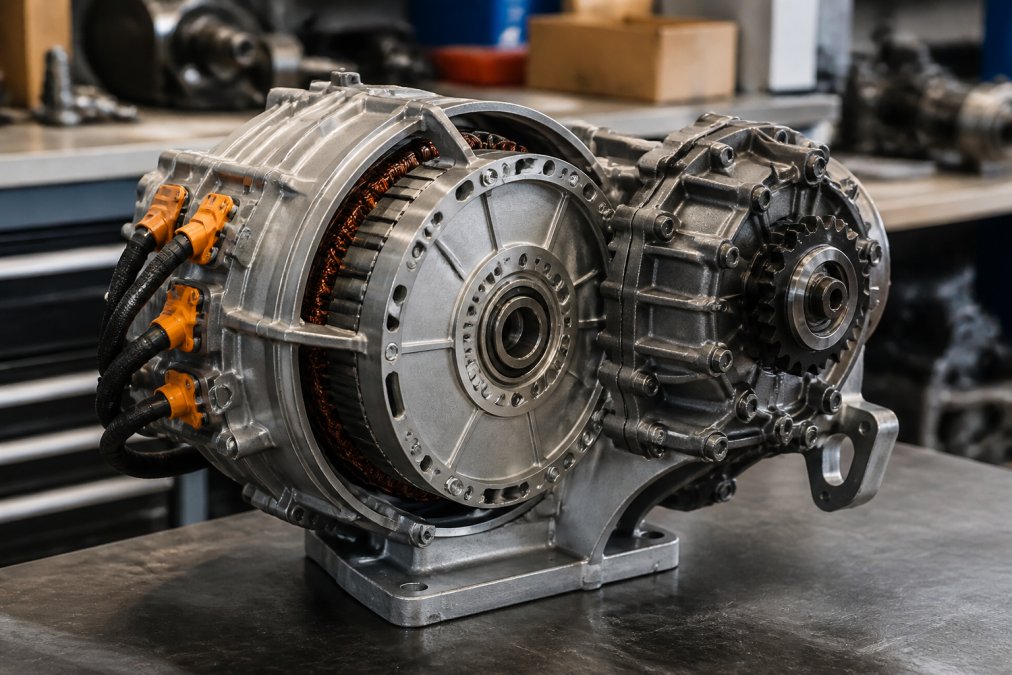
An electric motor converts electrical energy directly into rotational force through electromagnetic interaction. Current flows through coils, creating a magnetic field that interacts with permanent magnets, producing rotation. This process is mechanically simple with no explosions, pistons, or valves.
An electric motor's torque is determined by current and magnetic field strength. Increase current, increase torque, instantly. The motor responds to electrical commands within milliseconds.
Combustion engines follow a different path. Fuel ignites, expanding gases push a piston, and mechanical linkages convert that linear motion into rotational force. This sequence takes time. At 8,000 RPM, the engine completes 133 combustion cycles per second, and each cycle must finish before the next begins.
The practical difference: electric motors produce their rated torque across a wide RPM range, while combustion engines produce rated torque only at specific RPM points. For riders, electric motorcycles feel consistent with predictable, linear acceleration. Gas bikes feel variable, with power building gradually as RPM climbs, peaking sharply, then falling off. low-end torque benefits.
Best Electric Motorcycle for Track Riding and Performance
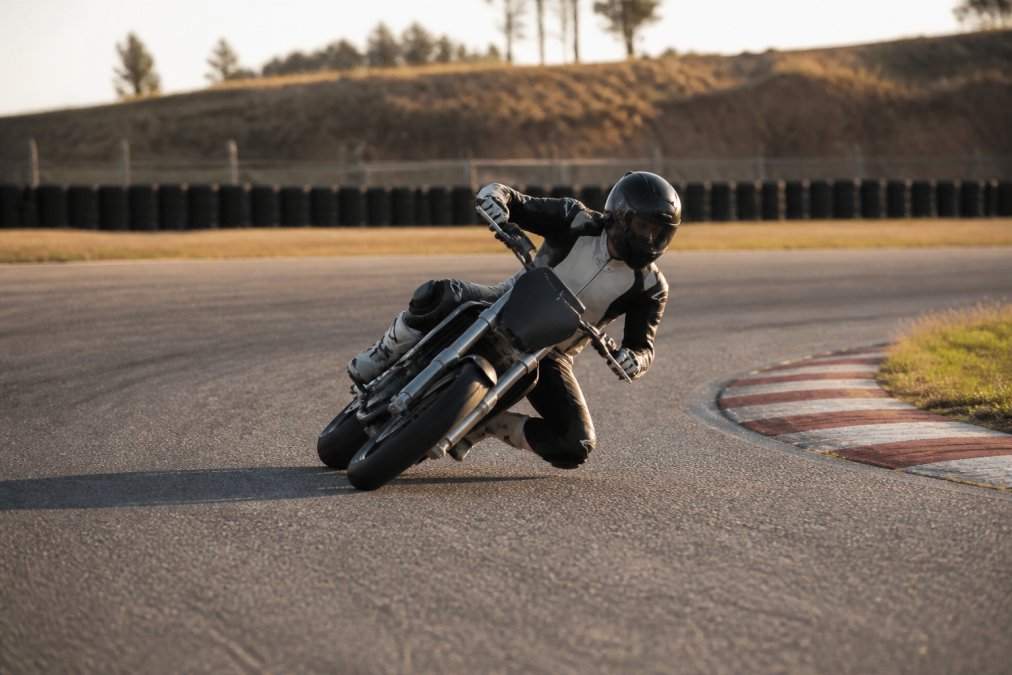
Track performance demands high torque-to-weight ratio, responsive throttle control, and reliable power delivery under stress. The Stark Varg dominates this category with 938 Nm of torque, 260 lbs of weight, and over 100 customizable ride modes.
The customization aspect is crucial. Riders can adjust the power curve, engine braking characteristics, and simulate a flywheel effect through software. This means the Varg can be tuned to feel like a 250cc bike for beginners, a 450cc for intermediate riders, or full-power for experts, all without changing hardware.
Battery capacity matters on track. The Varg's 7.2 kWh battery provides 1.3-7 hours of ride time depending on riding intensity and selected ride mode. For track days, expect 1-2 hours of continuous riding before depletion.
The Zero SR/S works for road course racing rather than motocross. Its street-focused design, cornering-sensitive traction control, and 140 lb-ft of torque make it competitive on asphalt, though it's heavier and less agile than the Varg.
Monarch Powersports offers private circuit demo sessions where you can test both the Stark Varg and Zero motorcycles at speed before purchase. This experience lets you feel the torque delivery, test different ride modes, and understand how electric power translates to track performance.
Throttle Response, Power Curves, and Rider Feel
Throttle response is the time between opening the throttle and feeling acceleration. Electric motorcycles respond within milliseconds, essentially instantaneous. Combustion bikes respond within 300-500 milliseconds as the engine revs up and power builds.
For riders accustomed to gas bikes, electric throttle response feels aggressive initially. You expect gradual force buildup and instead the bike accelerates hard immediately. This requires adjustment, though most new electric motorcycle riders adapt within 2-3 rides.
Power curves illustrate this difference visually. An electric motor's power curve is relatively flat, torque stays constant across a wide RPM range, then drops sharply at high RPM. A combustion engine's power curve rises gradually, peaks sharply at a specific RPM, then falls off.
The flat power curve of electric motorcycles means acceleration feels consistent across speed ranges. The peaked power curve of combustion engines requires working within the power band for optimal performance through aggressive downshifts and clutch management.
Maintenance, Drivetrain Efficiency, and Long-Term Costs
Electric motorcycles eliminate the maintenance burden of combustion engines. No oil changes, air filter replacements, spark plugs, or valve adjustments. The motor has no wearing parts in the traditional sense. Brakes and tires wear, and batteries degrade over time, but the core powertrain requires virtually no maintenance.
Combustion motorcycles demand regular servicing. Oil changes every 3,000-5,000 miles, air filter replacements, spark plug changes, and periodic valve adjustments are unavoidable. Annual maintenance easily runs $200-400 for a well-maintained bike.
Electric motors convert 85-90% of electrical energy into mechanical motion (energy.gov). Combustion engines convert 20-30% of chemical energy into mechanical motion; the rest dissipates as heat. This efficiency gap explains why electric motorcycles travel farther on stored energy.
However, combustion engines refuel in minutes at any gas station. Electric motorcycles require 1-2 hours for a full charge at home, or 20-30 minutes with rapid charging. For daily commuting, home charging is convenient. For long-distance touring, charging time becomes a constraint.
Long-term costs favor electric motorcycles if you keep them long enough to amortize the higher purchase price through lower maintenance. A rider keeping a bike for 5-10 years will see significant savings. A rider trading bikes every 2-3 years may not recoup the purchase-price premium.
Monarch Powersports's certified technicians can calibrate both electric and combustion motorcycles to your exact specifications, ensuring optimal performance and reliability. Professional setup is especially valuable for electric motorcycles, where ride mode calibration and battery management settings impact the riding experience significantly.
Electric motorcycle torque delivery fundamentally changes how bikes accelerate and feel. The instant torque, flat power curve, and minimal maintenance make electric motorcycles compelling for riders seeking modern performance. Combustion engines still excel at high-speed power delivery, range, and the tactile engagement many riders value.
The best choice depends on your riding style and priorities. If you prioritize instant acceleration, low maintenance, and smooth power delivery, electric motorcycles like the Stark Varg and Zero SR/S deliver. If you value engagement, range, and the traditional riding experience, combustion bikes like the Husqvarna Svartpilen 401 and Kawasaki Ninja 400 remain excellent choices.
At Monarch Powersports, we're authorized partners for both Stark Future and Zero Motorcycles, as well as Husqvarna. Schedule a private circuit test ride to experience both powertrain types at speed. Our certified technicians will calibrate your chosen motorcycle to match your exact riding preferences, ensuring you get the performance and handling you demand. With our secure 700Credit financing technology, you can make your decision confidently, knowing your credit remains protected throughout the process.
=== FAQ ANSWERS (audit these too, same rules) ===
[1] Q: Which engine has more torque, electric or gas? A: Electric motorcycles deliver maximum torque instantly from zero RPM, while combustion engines require higher RPMs to reach peak torque. A Zero SR/S produces 140 lb-ft of torque immediately, whereas the Husqvarna Svartpilen 401 reaches its 28.8 lb-ft peak at 7,000 RPM. However, total torque output depends on the specific bike, high-performance electric motorcycles like the Stark Varg produce 691.8 lb-ft at the rear wheel, far exceeding most street combustion bikes.
[2] Q: Why do electric motorcycles provide instant torque? A: Electric motors generate maximum rotational force immediately because they don't require a combustion cycle to build power. There's no need to rev the engine or wait for RPM build-up. The motor's electromagnetic characteristics allow full torque delivery at any speed, making throttle response instantaneous. This is fundamentally different from internal combustion engines, which rely on fuel ignition and piston movement to generate power, inherently creating a delay between throttle input and peak torque availability.
[3] Q: What are the performance trade-offs between electric and combustion motorcycles? A: Electric motorcycles excel at instant acceleration and smooth power delivery but face range limitations and longer charging times. Combustion bikes offer extended range, quick refueling, and a familiar mechanical engagement that many riders prefer. Electric bikes require less maintenance and produce zero emissions, while gas bikes deliver engine sound and vibration that some riders value. For track use, electric motorcycles provide consistent torque throughout a session, whereas combustion engines maintain steady performance but require gear changes to optimize power delivery across different speeds.
[4] Q: How does torque affect acceleration on a motorcycle? A: Torque is the rotational force that directly drives acceleration. Higher torque means faster off-the-line speed and quicker mid-range acceleration. On a motorcycle, torque-to-weight ratio is critical, the Stark Varg weighs 260-265 lbs with 691.8 lb-ft of rear-wheel torque, creating exceptional acceleration. The Zero SR/S at 140 lb-ft with approximately 490 lbs of weight also delivers strong acceleration. Combustion bikes like the Husqvarna Svartpilen 401 produce 28.8 lb-ft, requiring higher RPMs and gear selection to achieve comparable acceleration. This is why electric motorcycles feel dramatically quicker off the line.
Frequently Asked Questions
Which engine has more torque, electric or gas?
Electric motorcycles deliver maximum torque instantly from zero RPM, while combustion engines require higher RPMs to reach peak torque. A Zero SR/S produces 140 lb-ft of torque immediately, whereas the Husqvarna Svartpilen 401 reaches its 28.8 lb-ft peak at 7,000 RPM. However, total torque output depends on the specific bike—high-performance electric motorcycles like the Stark Varg produce 691.8 lb-ft at the rear wheel, far exceeding most street combustion bikes.
Why do electric motorcycles provide instant torque?
Electric motors generate maximum rotational force immediately because they don't require a combustion cycle to build power. There's no need to rev the engine or wait for RPM build-up. The motor's electromagnetic characteristics allow full torque delivery at any speed, making throttle response instantaneous. This is fundamentally different from internal combustion engines, which rely on fuel ignition and piston movement to generate power, inherently creating a delay between throttle input and peak torque availability.
What are the performance trade-offs between electric and combustion motorcycles?
Electric motorcycles excel at instant acceleration and smooth power delivery but face range limitations and longer charging times. Combustion bikes offer extended range, quick refueling, and a familiar mechanical engagement that many riders prefer. Electric bikes require less maintenance and produce zero emissions, while gas bikes deliver engine sound and vibration that some riders value. For track use, electric motorcycles provide consistent torque throughout a session, whereas combustion engines maintain steady performance but require gear changes to optimize power delivery across different speeds.
How does torque affect acceleration on a motorcycle?
Torque is the rotational force that directly drives acceleration. Higher torque means faster off-the-line speed and quicker mid-range acceleration. On a motorcycle, torque-to-weight ratio is critical—the Stark Varg weighs 260-265 lbs with 691.8 lb-ft of rear-wheel torque, creating exceptional acceleration. The Zero SR/S at 140 lb-ft with approximately 490 lbs of weight also delivers strong acceleration. Combustion bikes like the Husqvarna Svartpilen 401 produce 28.8 lb-ft, requiring higher RPMs and gear selection to achieve comparable acceleration. This is why electric motorcycles feel dramatically quicker off the line.
Frequently Asked Questions
Which engine has more torque, electric or gas?
Electric motorcycles deliver maximum torque instantly from zero RPM, while combustion engines require higher RPMs to reach peak torque. A Zero SR/S produces 140 lb-ft of torque immediately, whereas the Husqvarna Svartpilen 401 reaches its 28.8 lb-ft peak at 7,000 RPM. However, total torque output depends on the specific bike—high-performance electric motorcycles like the Stark Varg produce 691.8 lb-ft at the rear wheel, far exceeding most street combustion bikes.
Why do electric motorcycles provide instant torque?
Electric motors generate maximum rotational force immediately because they don't require a combustion cycle to build power. There's no need to rev the engine or wait for RPM build-up. The motor's electromagnetic characteristics allow full torque delivery at any speed, making throttle response instantaneous. This is fundamentally different from internal combustion engines, which rely on fuel ignition and piston movement to generate power, inherently creating a delay between throttle input and peak torque availability.
What are the performance trade-offs between electric and combustion motorcycles?
Electric motorcycles excel at instant acceleration and smooth power delivery but face range limitations and longer charging times. Combustion bikes offer extended range, quick refueling, and a familiar mechanical engagement that many riders prefer. Electric bikes require less maintenance and produce zero emissions, while gas bikes deliver engine sound and vibration that some riders value. For track use, electric motorcycles provide consistent torque throughout a session, whereas combustion engines maintain steady performance but require gear changes to optimize power delivery across different speeds.
How does torque affect acceleration on a motorcycle?
Torque is the rotational force that directly drives acceleration. Higher torque means faster off-the-line speed and quicker mid-range acceleration. On a motorcycle, torque-to-weight ratio is critical—the Stark Varg weighs 260-265 lbs with 691.8 lb-ft of rear-wheel torque, creating exceptional acceleration. The Zero SR/S at 140 lb-ft with approximately 490 lbs of weight also delivers strong acceleration. Combustion bikes like the Husqvarna Svartpilen 401 produce 28.8 lb-ft, requiring higher RPMs and gear selection to achieve comparable acceleration. This is why electric motorcycles feel dramatically quicker off the line.